
Auto Sync Orders
New orders flow directly into OmniOrders as they come in—no delays or manual imports needed.
Shopify Integration
Connect your Shopify store and sync everything automatically
Connect your Shopify store to OmniOrders and manage everything from one place. Your products, orders, and inventory will sync automatically—no more manual updates or switching between platforms.
Connecting your Shopify store to OmniOrders means new orders flow in automatically, inventory levels stay in sync across all your channels, and fulfillment updates push back to Shopify the moment they happen — no manual imports, no overselling, and no switching between platforms.
New orders flow directly into OmniOrders as they come in—no delays or manual imports needed.
Stock levels update automatically across Shopify and all your other channels. This prevents overselling.
Add or edit products in one place and changes sync everywhere instantly.
Shipping info and tracking numbers automatically update in Shopify when orders ship.
Gather these items before connecting—they make setup faster and smoother:
You need admin or staff permissions in your Shopify store. Only these roles can install apps, authorize API access, and manage integration settings. Check your role under Settings → Users and permissions.
You need an active OmniOrders subscription. The Shopify app is free to install, but syncing requires a paid OmniOrders plan.
Have at least one product with variants and inventory tracking enabled in Shopify before connecting. This lets you verify the sync works right after setup.
Go to the Shopify App Store
Open the OmniOrders listing on the Shopify App Store and click Install
Authorize OmniOrders
Shopify will show you the list of permissions OmniOrders needs. Review them and click Install to authorize.
You’re redirected to OmniOrders
After authorizing, Shopify sends you back to OmniOrders. Your store is now connected and shows up in your Integrations list.
Configure Sync Actions
Open your new Shopify integration and go to the Settings tab. You’ll see four sync sections — enable each one you need:
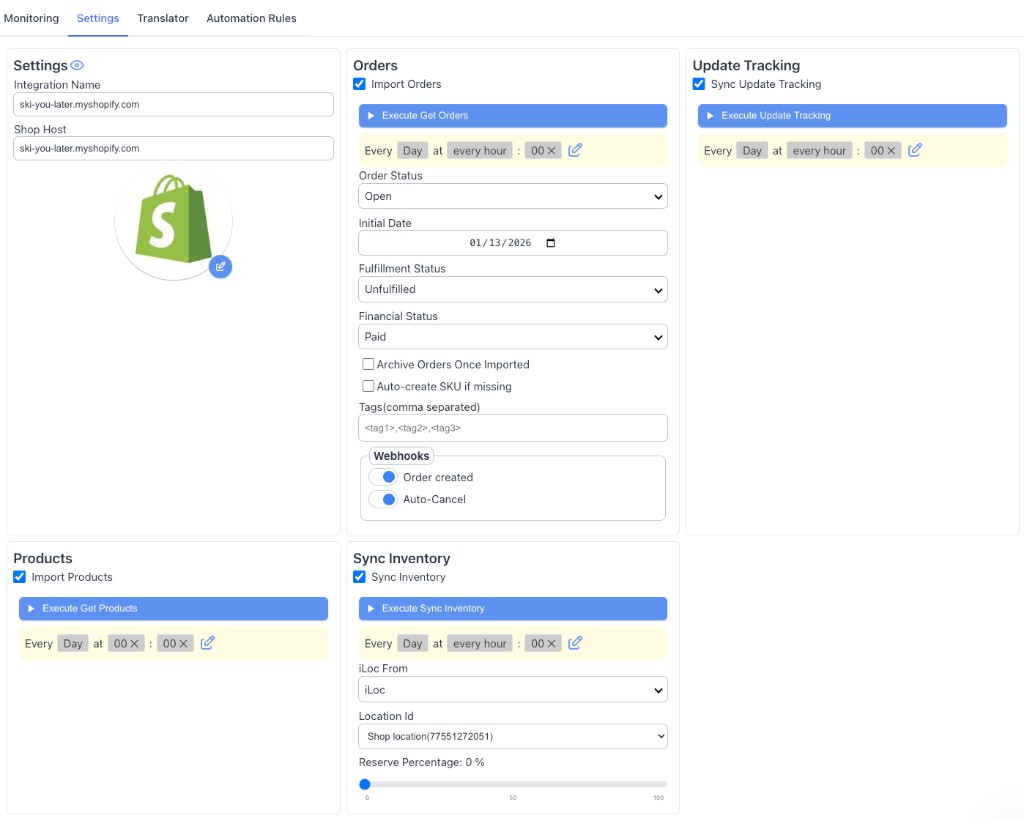
Save Settings
Click Save Changes to apply your configuration and activate the integration.
The Shopify integration syncs products (names, SKUs, variants, images, pricing, inventory quantities), orders (line items, customer addresses, notes, payment and fulfillment status), and inventory updates — bidirectionally, so changes in either Shopify or OmniOrders reflect on both sides in real time.
Each sync action in the Settings tab has its own schedule and configuration options. Here’s what each section does.
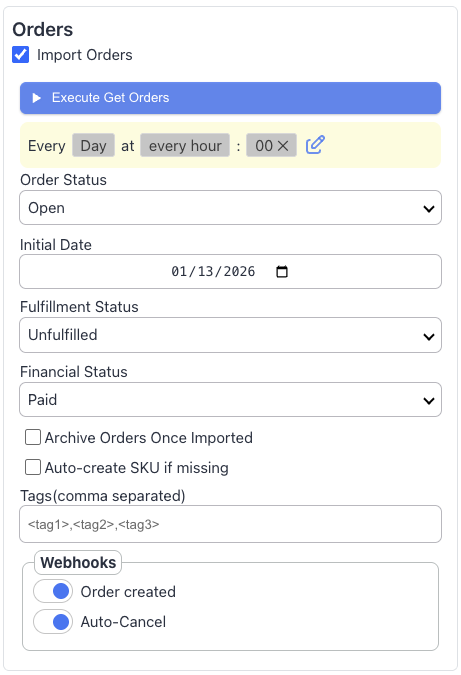
Enable Import Orders to pull orders from Shopify into OmniOrders. You can filter which orders are imported:
| Field | Description |
|---|---|
| Order Status | Filter by status (e.g., Open) |
| Initial Date | Only import orders created after this date |
| Fulfillment Status | Filter by fulfillment state (e.g., Unfulfilled) |
| Financial Status | Filter by payment state (e.g., Paid) |
| Archive Orders Once Imported | Archive orders in Shopify after importing |
| Auto-create SKU if missing | Automatically create a SKU when an order line item has none |
| Tags | Only import orders matching these Shopify tags (comma separated) |
Webhooks let orders arrive in real time without waiting for the schedule:
Click Execute Get Orders to run an import manually at any time.
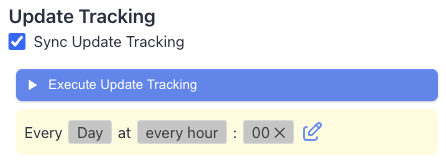
Enable Sync Update Tracking to push shipment tracking numbers back to Shopify when orders are fulfilled in OmniOrders. Click Execute Update Tracking to run it manually.
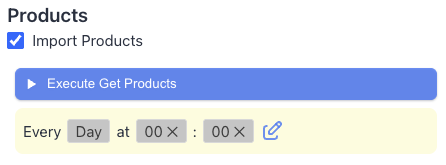
Enable Import Products to sync your Shopify product catalog into OmniOrders. Click Execute Get Products to run it manually.
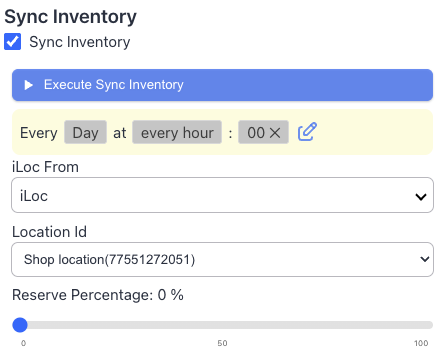
Enable Sync Inventory to keep stock levels in sync between OmniOrders and Shopify.
| Field | Description |
|---|---|
| iLoc From | The OmniOrders inventory location to sync from |
| Location Id | The Shopify location to update inventory for |
| Reserve Percentage | Hold back a percentage of stock from being pushed to Shopify |
Click Execute Sync Inventory to run it manually.
Check if everything is syncing correctly:
Need to temporarily stop syncing?
Change what syncs:
Orders sync via webhooks when created. Products and inventory sync on a schedule you configure — set the interval in each sync action’s schedule settings.
Yes! Connect as many Shopify stores as you need. Each store syncs independently.
We import orders from the last 30 days during initial setup. Older orders can be imported on request.
Absolutely. We use OAuth 2.0 secure authentication and encrypt all data in transit and at rest.
Problem: New Shopify orders aren’t appearing in OmniOrders
Solutions:
Problem: Stock changes in Shopify don’t update in OmniOrders (or vice versa)
Solutions:
Problem: Shopify integration stops syncing or shows a permissions error
Solutions:
Problem: Products appear twice after connecting Shopify
Solutions:
Our team is here to help with setup, troubleshooting, or any questions. Get Support →
Watch a complete walkthrough of the Shopify integration setup process. Watch Now →
Explore other platforms and integration options. View Integrations →